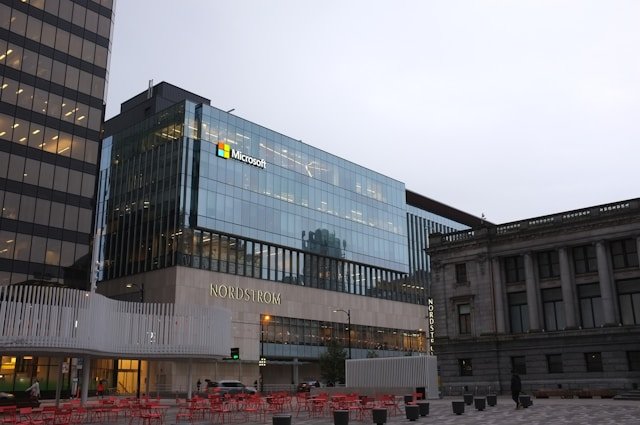

Microsoft is cutting another 9,000 jobs, or about 4 percent of its global workforce, following a previous round of restructuring in May that cut 6,000 positions.
The layoffs will not only be at the games division (Xbox, Activision), but will be spread across all departments and regions, it was announced on Wednesday. The employees involved will be informed today, Microsoft said.
With the operation, the tech giant wants to save costs and work more efficiently. Among other things, there would be cuts in the many management levels. In the previous round of layoffs, mainly software developers were laid off. Some of their tasks are being taken over by AI.
Microsoft is investing a record $80 billion in data centers and cloud technology due to the growing demand for artificial intelligence.
Microsoft has been in the news regularly in recent years with rounds of layoffs in which thousands of people had to leave each time. In 2022, it was still going to 18,000 people (one percent of the then workforce). In 2023, 10,000 people had to leave. In 2024, it closed four smaller game studios to focus on larger titles, and 1,900 people had to leave at Activision Blizzard, which it acquired two years earlier.
Add that up and you get the idea that there are only a few people left at Microsoft. Yet the total workforce is increasing compared to the past. For example, Microsoft had approximately 228,000 employees in 2024. Ten years earlier, there were ‘only’ 128,000. That is because many tech companies, regardless of layoffs in departments where they are restructuring, often continue to hire in departments where they want to grow.
For Microsoft, this is compounded by the fact that it regularly acquires companies, which means that those employees also end up on Microsoft’s payroll. Skype (2011), LinkedIn (2016), Github (2018), Nuance Communications (2021), and Activision Blizzard (2022) are some of the larger acquisitions of the past 15 years.
In the case of Activision Blizzard, for example, 13,000 people were added, of which almost two thousand had to leave two years later. That is a substantial number, but in net terms Microsoft’s workforce is swelling.